From Mockup to Reality: A Case Study on How Billboard Previews Improve Campaign ROI
Somewhere between a copywriter’s final headline and a media buyer’s signed contract, there used to be a dangerous gap: nobody could actually see how the ad would look, thirty feet tall, against real sky and real traffic. That gap cost agencies money, clients patience, and sometimes an entire campaign. Today, the fix is almost boring in its simplicity — preview the board before you print it.
Why Seeing Comes Before Believing
Outdoor advertising has always been a leap of faith. A flat design file rarely tells you whether text will vanish in glare, whether a logo will clash with a gas station sign next door, or whether the composition even reads at highway speed. Agencies learned this the hard way, through reprints, wasted vinyl, and clients who approved one thing on a monitor and rejected another thing on the street.
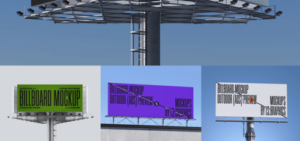
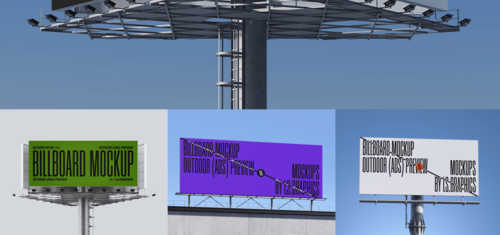
A billboard mockup closes that gap by dropping the creative into a photorealistic street scene before a single panel gets printed. Instead of imagining the outcome, teams and clients look at it. That single shift — from imagination to observation — is where most of the ROI story actually begins.
A Real Workflow, Not a Theory
Consider how outdoor campaigns for streaming platforms typically get approved. Marketing teams for shows like major Netflix or HBO releases routinely present billboard concepts to executives using rendered previews placed against actual city intersections — Sunset Boulevard, Times Square, a motorway junction — long before any physical installation happens. This isn’t a hypothetical; it’s standard practice across large ad agencies, because a rendered preview lets a creative director catch a legibility problem at the review stage instead of at the unveiling.
Retail and automotive brands follow the same logic. A car manufacturer testing a new model launch will mock up the same design across several board formats — a bulletin, a poster panel, a digital spectacular — to see which one actually preserves brand contrast in daylight versus at night. That comparison is nearly impossible to judge from a flat Photoshop canvas alone.
What changes in practice:
- Revisions happen on screen, not on printed vinyl, cutting reprint costs
- Client sign-off moves faster because stakeholders see context, not just artwork
- Legibility and contrast issues surface before installation day
- Multiple location variants can be tested side by side in minutes
The Cost of Skipping the Preview Step
Every agency has a story about a board that looked perfect in Illustrator and unreadable on the highway. Font weight too thin against a bright sky, a background color that disappeared into an overcast afternoon, a call-to-action placed exactly where a streetlight pole would block it. These aren’t rare accidents; they are the predictable result of designing without context.
The financial damage compounds quickly. Printing a large-format board is not a minor expense, and a bad first impression on a client account rarely stays contained to a single project. When an agency instead builds its internal review process around a tool like billboard mockup templates, that entire category of error gets caught during internal review, not during a client meeting or, worse, after installation.
Measuring the ROI Difference
The return on investment from previewing isn’t abstract — it shows up in three measurable places:
- Fewer production do-overs. Catching a design flaw on screen costs nothing; catching it on a printed panel costs materials, labor, and schedule delays.
- Faster client approval cycles. Decision-makers approve visuals they can contextualize immediately, which shortens the back-and-forth that stalls campaign timelines.
- Better creative testing. Agencies can run several compositions against the same mockup scene and choose the strongest option before committing budget to print.
Small agencies feel this most acutely, since they rarely have the buffer to absorb a wasted print run. A design resource library like ls.graphics has become a quiet fixture in many workflows precisely because it removes guesswork from a stage that used to rely on gut feeling.
Where This Leaves the Industry
Billboard advertising remains one of the few media formats that people can’t skip, mute, close a tab on, or scroll past — which is exactly why getting the details right matters so much before the panel ever leaves the print shop. The agencies winning more repeat business today aren’t necessarily the ones with the boldest concepts; they’re the ones who caught the small mistakes before the board went up. Previewing isn’t a shortcut around good design — it’s what makes good design survive the trip from screen to street. And in an industry where a single misjudged panel can undo months of planning, that trip is worth taking carefully.