Cronos Dental Clinic: How Technology Is Changing the Standard of Modern Dental Care
Dental care is undergoing a significant transformation.
What was once largely dependent on conventional examinations, physical impressions and the individual stages of treatment is becoming increasingly digital, interconnected and precise.
For patients, this transformation can mean better planning, greater comfort and a clearer understanding of their treatment before it begins.
For dental clinics, however, technology creates a different challenge: owning advanced equipment is one thing. Integrating it into the way dental care is actually delivered is another.
At Cronos Dental Clinic in Tirana, Albania, technology has become part of a broader approach to modern dental care, particularly in complex implantology, restorative dentistry and full-mouth rehabilitation.
The objective is not technology for its own sake.
It is greater precision at every stage of treatment.
Dental Care Starts Before Treatment Begins
One of the biggest changes in modern dentistry is happening before a dentist performs any procedure.
Diagnostics and planning have become increasingly important, especially for complex dental care.
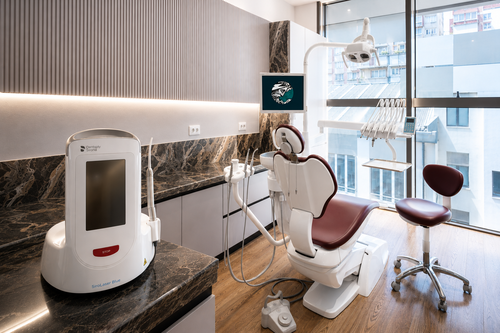
At Cronos, this digital approach is supported by Dentsply Sirona technology, one of the internationally established names in professional dental equipment and digital dentistry.
The clinic integrates advanced Sirona diagnostic and digital systems into its workflow, alongside technologies such as 3D CBCT imaging, digital intraoral scanning, CAD/CAM systems, Digital Smile Design and digitally guided implant planning.
Rather than operating as separate pieces of equipment, these technologies contribute to a more connected approach to dental care, allowing clinicians to gather detailed information and use it throughout diagnosis, planning and treatment.
Together, these tools can provide clinicians with considerably more information about a patient’s teeth, bone structure, bite and overall oral condition before treatment begins.
For dental implant treatment, that information is particularly valuable.
Implant dentistry involves much more than replacing a missing tooth. The position and condition of the bone, the placement of the implant and the design of the final restoration must all work together.
Digital imaging and planning can help the dental team evaluate these factors before surgery and plan implant positioning according to the wider restorative objective.
This is where technology from manufacturers such as Dentsply Sirona becomes more than an equipment upgrade. When properly integrated into clinical workflows, it can support a more precise and predictable approach to complex dental care.
Technology, however, remains a tool.
Its value ultimately depends on the expertise of the clinicians using it.
Combining Technology With Clinical Expertise
Cronos has built its dental care model around combining digital dentistry with experienced clinicians across implantology, prosthodontics, restorative dentistry and aesthetic dental care.
Its dentists follow European clinical protocols and have completed additional professional training and certifications internationally, including in Germany, Italy and Switzerland. Members of its surgical team have also undertaken advanced specialization programs in the United States.
This combination becomes particularly important when treating complex cases.
A patient requiring one dental implant has very different clinical needs from someone requiring extensive reconstruction of both arches.
In full-mouth dental rehabilitation, dentists may need to consider bone structure, implant positioning, bite forces, aesthetics, prosthetic design and long-term function as parts of the same treatment.
Modern dental technology can make those decisions more informed.
Clinical expertise determines how that information is translated into treatment.
From Digital Scan to Final Restoration
One of the most visible examples of technology changing dental care is the transition from traditional impressions toward digital workflows.
Digital intraoral scanning can create highly detailed representations of a patient’s mouth without relying entirely on conventional impression materials.
At Cronos, digital scanning forms part of a broader workflow in which information can move from diagnostics and treatment planning toward the design of the final restoration.
CAD/CAM technology can assist clinicians and dental technicians in designing restorations with a high level of precision, while Digital Smile Design allows proportions and aesthetics to be evaluated during treatment planning.
For the patient, much of this technology may remain largely invisible.
What matters is what it can produce: a dental treatment process that is more planned, more measurable and increasingly personalized.
That philosophy extends to the materials used in the final restoration.
Cronos works with internationally established implant systems and premium dental materials also used by clinics across major European and international markets.
In complex restorative cases, treatment may include solutions such as titanium structures combined with zirconia restorations, depending on the patient’s individual clinical requirements.
The goal is not simply a cosmetic transformation.
It is dental care designed around both aesthetics and long-term function.
Why Long-Term Thinking Matters in Dental Care
Modern dentistry has become remarkably good at producing immediate visual transformations.
But a photograph taken immediately after treatment tells only part of the story.
The real measure of successful dental care is what happens later.
How does the restoration function? How does it respond to everyday bite forces? How well has the treatment been maintained? And how does it perform years after it was completed?
This is why Cronos places significant emphasis on long-term treatment planning.
The clinic provides a 10-year guarantee on implants, zirconia crowns and major restorations, subject to its clinical and maintenance conditions.
The guarantee represents something increasingly important in premium dental care: accountability beyond the day treatment is completed.
For patients undergoing complex dental procedures, particularly those traveling internationally, that long-term perspective can be just as important as the technology used during treatment.
Technology Is Also Changing the Patient Experience
The digital transformation of dental care is not limited to what happens inside the treatment room.
Patients themselves have changed.
They research procedures before contacting a clinic. They compare treatment options, materials, dentists, technologies and prices. International patients may communicate with a clinic remotely before deciding whether to travel.
This has made transparency increasingly important.
Digital dentistry allows clinics to explain treatment visually, plan cases in greater detail and provide patients with a clearer understanding of what their dental care may involve.
For Cronos, this is particularly relevant because the clinic treats both local and international patients.
Someone traveling to Albania for dental treatment needs to understand not only the expected result but the process required to achieve it.
The better that process can be planned and communicated, the smaller the distance between patient and clinic becomes.
A Different Direction for Modern Dental Care
Technology will continue to change dentistry.
Artificial intelligence, increasingly sophisticated imaging, digital manufacturing and data-driven treatment planning are likely to make dental care even more precise over the coming years.
But the clinics that benefit most from that evolution may not simply be those purchasing the newest equipment.
They will be the ones capable of integrating technology into a broader clinical philosophy.
That is the direction Cronos Dental Clinic is pursuing.
By combining Dentsply Sirona technology, digital diagnostics, advanced treatment planning, experienced clinicians, premium materials and a long-term approach to restorative and implant dentistry, Cronos is building a dental care model centered on precision rather than volume.
And while Albania’s competitive treatment costs remain an advantage for international patients, price is only part of the story.
The more significant development is that modern technology is helping high-standard dental care become increasingly accessible beyond the markets traditionally associated with premium dentistry.
For patients, that creates more choice.
For dental clinics, it raises expectations.
And for Cronos Dental Clinic, it reinforces a simple principle:
The future of premium dental care is not just about doing more. It is about planning better, treating more precisely and creating results designed to last.